How Kids Learn Language
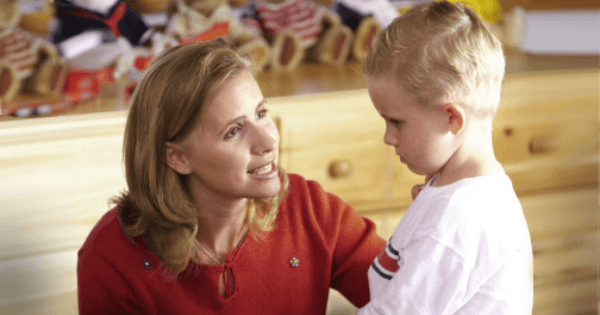
From birth to 5 years of age, children learn language by participating in back-and-forth interactions with the important adults in their lives. When a child sends a message, whether it may be with a gesture, a sound, or a word, his parents’ responses serve as helpful feedback that reinforce and encourage his learning. This responsive feedback is an essential ingredient in the language-learning process for every child. Unfortunately, if a child is not exposed to much adult interaction, or is already communicating less than others his age, he’s unlikely to receive as much of this essential feedback.
Risk Factors for Language Delay
Delays in language development often arise either as a result of a physiological disorder, or as a result of under-stimulation i.e. limited opportunities for practicing speech. Physiological issues that may cause language delay include hearing loss, slow physical development or an intellectual disability. However, even a normally developing child will be at risk of having their language falling behind their peers if they are under-stimulated. This may happen if the child frequently watches television alone, or doesn’t spend much time talking with adults for any other reason. From a Speech-Language Therapist’s point of view, there are several more telltale signs that language delay may be an issue:
- The child is or was quiet as an infant, with little babbling.
- Ear infections or blocked ears have been a frequent issue.
- The child has a limited number of consonant sounds, such as p, b, m, t, d, n, y, k, g.
- They do not readily imitate words.
- Very few verbs (action words) are used, instead, the child’s speech is limited to naming objects.
- The child has difficulty playing with peers or with other forms of social interaction.
- They have a family history of communication delay or learning difficulties.
- They use very few gestures to communicate.
It is worth noting that some factors thought to increase the risk of language delay actually do not! For example, it is a myth that learning two languages at the same time (bilingualism) causes language delays, nor are second and third-born children necessarily more likely to be late to talk. Boys can be later to speak but developmentally not far behind aged-matched girls.
Prompt Support is Best
Since children with delayed speech or language delays can’t participate fully during activities and conversations, they may fall even further behind if they are not provided with the help they need. It is therefore so important not to “wait and see” if there are any signs that you child’s communication development may be delayed. Some parents are advised that their child will be likely to “grow out of it”, and that they should simply wait for the child to catch up, but this approach means that precious time can be lost during a critical learning phase! If a child with a delay receives extra support from the important adults in his life, he can make significant gains in his communication skills and will form the right foundations for higher learning. Simply put, the earlier a child receives the help he needs, the better his or her language outcome will be. Take a look at our diagram explaining the language milestones for younger children. If your child is falling behind on a few of them, it might be worth considering making arrangements for some professional help.
How to Help a Child with Language Delay
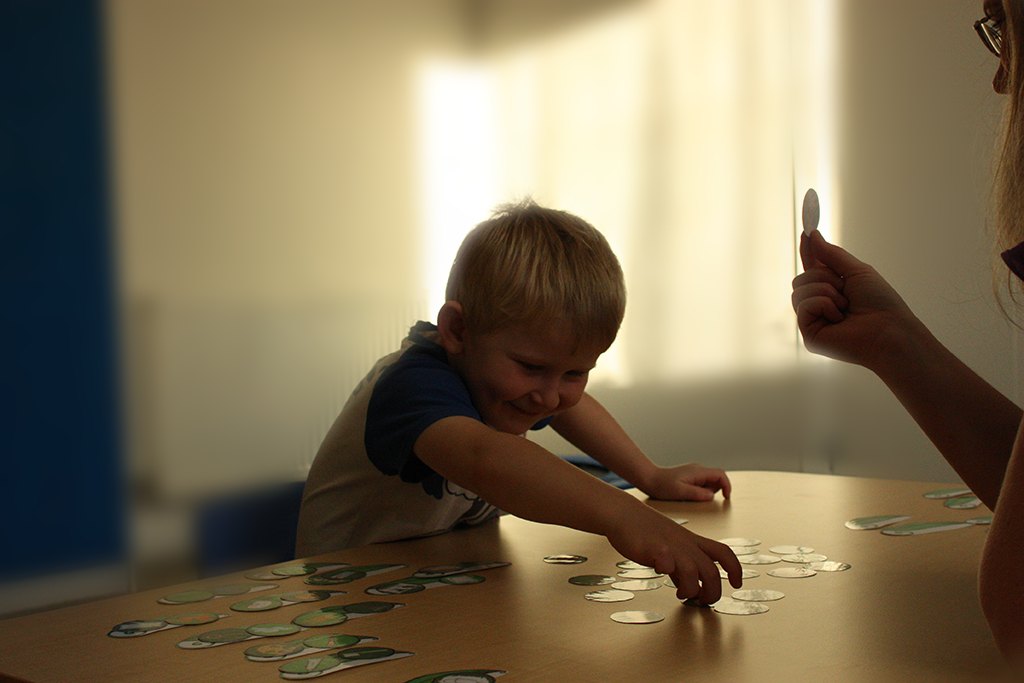
Usually, a Speech-Language Therapist (SLT) will spearhead the support for children with language delay. There is no one-size-fits-all approach to therapy – the SLT will assess the child’s specific problems and focus on teaching each skill that the child is missing. Regarding assessment, the SLT might use language tests designed to get your child to use words or to see how your child responds to requests, commands or questions. You may also expect several questions as a parent, as the SLT finds out about how your child understands and uses language at home. If a language delay is suspected, the SLT might suggest some therapy sessions, or will provide you with techniques and strategies to apply at home. Speaking of techniques to help language development at home, you might wish to try some of these:
- Go on a walk and talk about what you see.
- For older kids, research a topic that interests them together.
- Try having a distraction-free family meal together.
- Turn off Screens! Here’s a great article explaining why.
- Set aside 10 minutes per day that are just for reading to your child.
- Review past events with your child, ask them what they enjoyed.
- Have a conversation with your child about whatever he wants to talk about.
In summary, early language intervention is critically important for children to develop the communication skills necessary for future success. If you have concerns as a parent, follow your instincts and seek out support. Your child will soon find the words to thank you for it.